Baccarat Crystals and Gold Leaf: An Art Lover's Tour of Dolmabahce
When you step through the ornate gates of Dolmabahce Palace, leaving the bustling streets of Istanbul behind, the immediate sensation is one of overwhelming luminosity. Unlike the secluded, pavilion-style architecture of Topkapi Palace, Dolmabahce was designed to face the world—specifically the West—with a grandeur that rivals Versailles or Schönbrunn. For the art lover, this is not merely a historical site; it is a monumental gallery of 19th-century craftsmanship, where light dances through Baccarat crystals and bounces off surfaces gilded with fourteen tons of gold leaf. As we explore the palace in January 2026, the preservation of these artistic treasures allows us to witness the same brilliance that Sultan Abdülmecid I envisioned over a century ago.
The Architectural Canvas: A Fusion of East and West
The palace is a fascinating study in eclecticism, a deliberate departure from traditional Ottoman architecture. While the floor plan retains elements of the traditional Turkish house with its central salon surrounded by rooms, the aesthetic is undeniably European. The designers employed a lavish mix of Baroque, Rococo, and Neoclassical styles, creating a visual language that speaks of an empire seeking modernization while holding onto its imperial dignity. This transition is best understood by diving into the history of the palace’s construction, which marked a pivotal cultural shift in the mid-19th century. The exterior façade, with its rhythmic columns and pediments, sets a neoclassical stage for the explosion of Rococo ornamentation that awaits inside.
The Crystal Staircase: A Masterpiece of Light
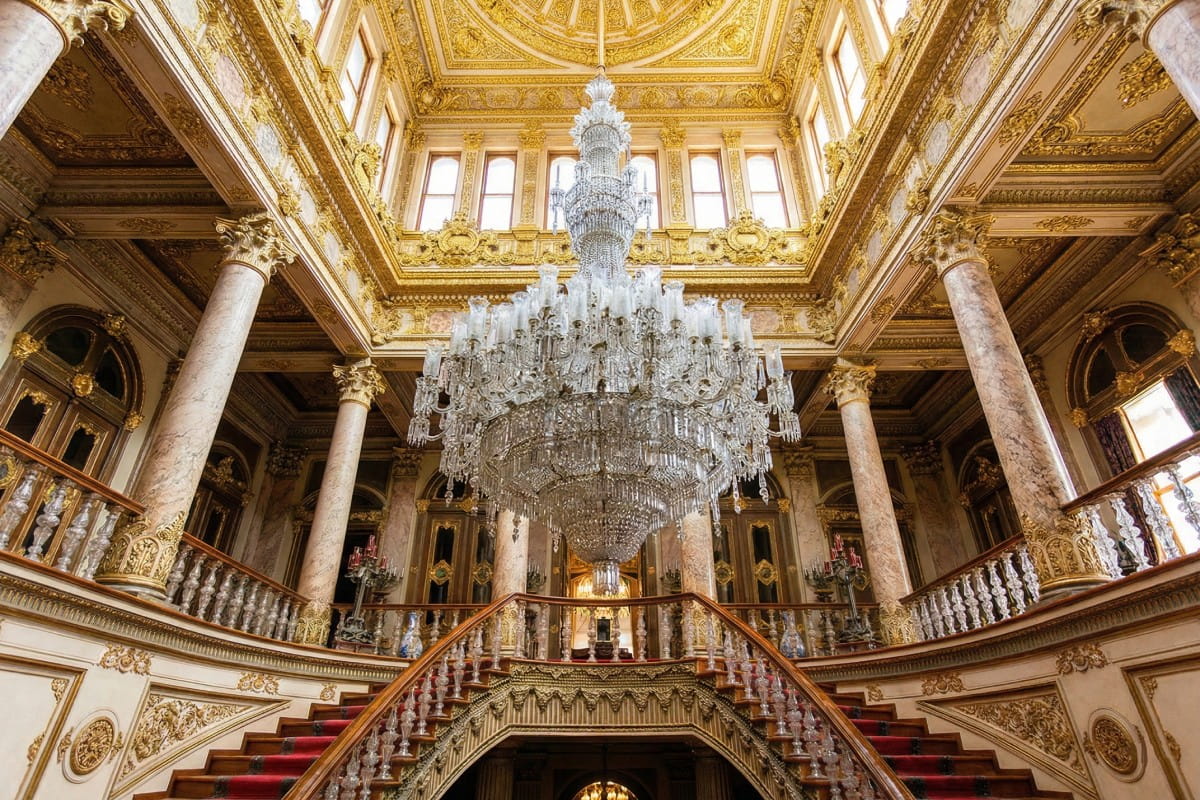
Perhaps the most photographed (in memory, if not by camera, due to restrictions) feature of the palace is the Crystal Staircase. This double-horseshoe staircase is not just a means of moving between floors; it is a theatrical stage designed to impress visiting dignitaries. The balustrade is constructed from Baccarat crystal, supported by brass and mahogany, creating a shimmering effect that changes with the time of day. Above, a massive crystal chandelier illuminates the space, ensuring that the sparkle of the balusters is constant. The engineering required to utilize glass as a structural element for the banisters was revolutionary for its time, showcasing a blend of industrial innovation and artistic delicacy that defines the palace's interior.
The Ceremonial Hall and the Bohemian Giant
Walking into the Muayede Salonu, or Ceremonial Hall, requires a moment of pause to absorb the sheer scale of the room. This vast hall, situated between the Harem and the administrative sections (Selamlık), boasts a dome that soars 36 meters high. However, the true artistic focal point hangs from the center of that dome: the world’s largest Bohemian crystal chandelier. Originally thought to be a gift from Queen Victoria, later archival research suggested it was purchased, but its provenance does not diminish its artistic value. It holds 750 lamps and weighs a staggering 4.5 tons. To understand where this hall fits within the greater layout of the complex, you can view the detailed breakdown of the palace sections.
The chandelier is not merely a lighting fixture; it is a piece of sculpture. The light it casts interacts with the colored marble pilasters and the intricate gold leaf work on the ceiling, creating an atmosphere of celestial grandeur. Below is a breakdown of the artistic elements that make this hall unique:
| Artistic Element | Details & Significance |
| The Chandelier | 4.5 tons, Bohemian crystal. It required a dedicated mechanical system to be lowered for cleaning and maintenance. |
| The Dome | 36 meters high, adorned with trompe-l'œil paintings that create an illusion of depth and three-dimensional architecture. |
| Acoustics | Designed for orchestral performances and large gatherings, utilizing under-floor heating systems that also aided sound travel. |
| Floor Parquetry | Intricate wood inlay work that mirrors the geometric complexity of the ceiling above. |
Woven Art: The Hereke Legacy
While your eyes are often drawn upward to the chandeliers and gold-leafed ceilings, the floors of Dolmabahce hold treasures of equal value. The palace is home to a vast collection of Hereke carpets, woven specifically for these spaces. The Hereke Imperial Factory was established to supply the finest textiles to the Ottoman court, and the carpets found here are the pinnacle of that production. These are not standard rugs; they are immense, room-sized artworks featuring double knots (Gördes knots) for durability and incredibly high distinctness of pattern. The wool, silk, and cotton blends feature motifs that harmonize with the Rococo and Baroque decorations on the walls, creating a seamless visual experience from floor to ceiling.
The Nuance of Gold Leaf Application
The omnipresence of gold in Dolmabahce is not simply a display of wealth; it is an artistic choice intended to amplify light. Approximately 14 tons of gold were used to gild the ceilings in monograms, floral patterns, and intricate moldings. The application of this gold leaf was done with such precision that even after nearly two centuries, the luster remains. In the darker winter months of Istanbul, this gold captures the light from the Baccarat crystals and the Bosphorus reflection, illuminating the rooms naturally. This technique of using gold to manipulate light is a hallmark of the interior design strategy used throughout the visiting routes of the palace.
Planning Your Art-Focused Tour
To truly appreciate these details, one must visit with the intention of seeing the art, not just checking a landmark off a list. The details in the parquetry, the refraction of light in the crystal stair balusters, and the texture of the Hereke carpets deserve close attention. Because the palace can get crowded, securing your entry in advance is highly recommended to allow for a more relaxed pace. You can arrange your entry via the Dolmabahce Palace & Harem Fast-Track Ticket to bypass the long lines and head straight for the art.
- Look Up: The ceilings are often more decorated than the walls, featuring Italianate frescoes and gold molding.
- Check the Light: Visit in the morning to see the sunlight hit the Crystal Staircase from the Bosphorus side.
- Observe the Vases: The palace houses immense Sèvres and Yıldız porcelain vases that are masterpieces of ceramic art.
- Respect the Silence: The audio guides are excellent, allowing you to absorb the visual splendor without the distraction of loud tour groups.
Dolmabahce Palace is a testament to an era where art, architecture, and political ambition intersected. From the shimmer of Baccarat crystal to the soft tread of Hereke silk, every inch of the palace was designed to be a masterpiece. It remains one of the most comprehensive collections of 19th-century decorative arts in the world, waiting for you to discover its glittering secrets.


