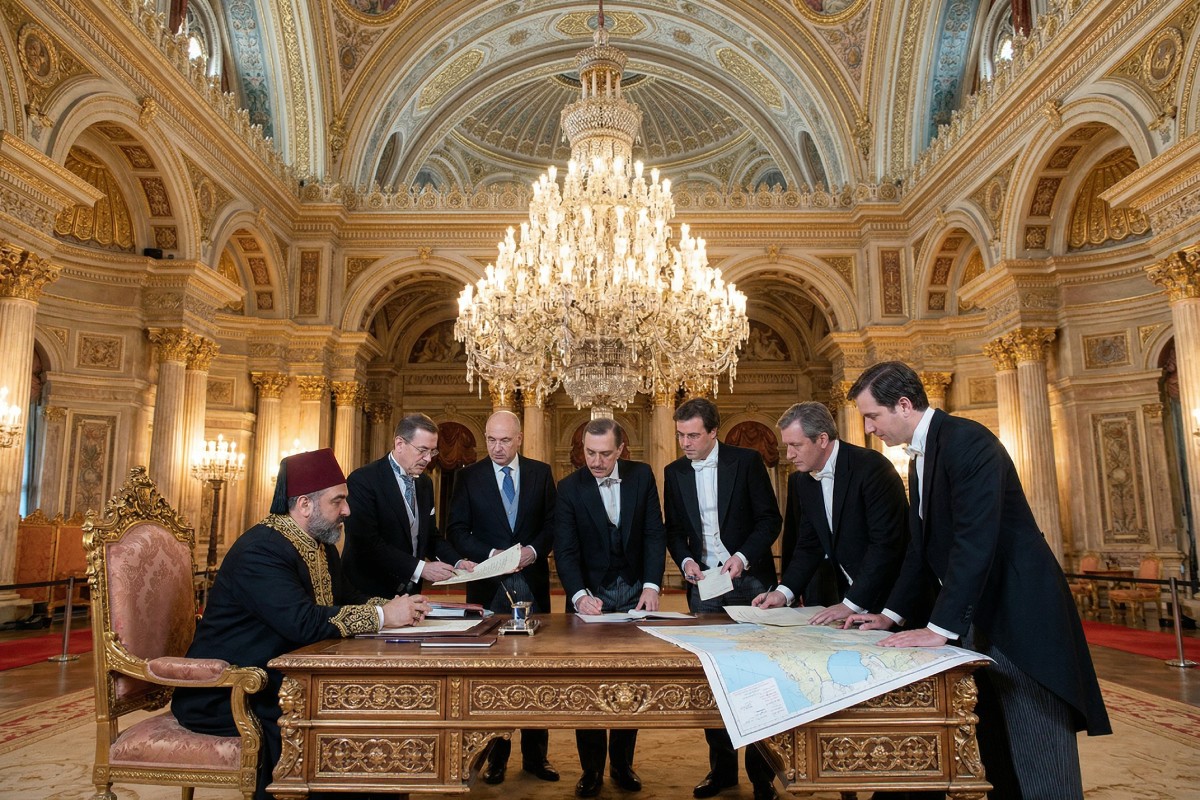
The Role of Dolmabahçe Palace in Ottoman Diplomacy
When travelers gaze upon the shimmering façade of Dolmabahçe Palace from the waters of the Bosphorus, they are not just looking at a royal residence; they are witnessing a desperate yet magnificent architectural statement of political relevance. Unlike the secluded and mysterious Topkapı Palace, which housed the Ottoman dynasty for centuries, Dolmabahçe was built to be seen. In the mid-19th century, as the geopolitical tides turned against the Ottoman Empire, the need for a modern, Western-style administrative center became undeniable. This palace was not merely a home for the Sultans; it was a grand stage designed to convince the Great Powers of Europe that the Ottoman state was still wealthy, powerful, and culturally aligned with the modern world.
A Shift in Axis: From Traditional Seclusion to European Engagement
The construction of Dolmabahçe Palace, commissioned by Sultan Abdülmecid I and completed in 1856, marked a definitive psychological and physical shift in Ottoman statecraft. Topkapı Palace represented the traditional, introverted nature of the classical empire. However, the 19th century demanded a different approach. The empire was undergoing the Tanzimat reforms, a period of reorganization intended to modernize the state and integrate it into the European diplomatic system. To host French diplomats, British ambassadors, and European royalty, the Sultans needed a venue that spoke their architectural language—Neoclassical, Baroque, and Rococo—while retaining a distinctly Ottoman soul.
Moving the court to Dolmabahçe was a strategic maneuver. It placed the Sultan right on the waterfront, visible and accessible, signaling an era of openness. The palace became the setting where the Empire’s fate was negotiated, where loans were discussed, and where alliances were forged. To understand the scale of this transition, one must look at the history of the late Ottoman period, where architecture served as a primary tool of foreign policy.
The Grand Design: Architecture Built to Impress
Every corner of Dolmabahçe was engineered to overwhelm foreign dignitaries with awe. The layout differs significantly from traditional Turkish homes; instead, it mimics the linear, functional grandeur of European palaces like Versailles or Schönbrunn. When an ambassador arrived, their journey through the palace was carefully choreographed to maximize the perception of Ottoman power. The Crystal Staircase, with its Baccarat crystal balusters and mahogany rail, was not just a way to get to the second floor; it was a dazzling ascent designed to intimidate and impress visitors before they even met the Sultan.
The interior organization played a crucial role in diplomatic protocol. The palace is divided into specific administrative and private zones. Exploring the various sections of the palace reveals the separation between the Selamlık (administrative quarters) and the Harem. The Selamlık was the domain of men and state affairs, where the Sultan received foreign envoys. Here, the decoration is heavier, more opulent, and distinctly masculine, filled with heavy drapery and gold leaf, ensuring that any visitor felt the weight of the Sultan's authority.
The Muayede Hall: The Center Stage of Diplomacy
The heart of diplomatic life at Dolmabahçe was undoubtedly the Muayede Salonu (Ceremonial Hall). This is one of the largest ballrooms in the world, capable of holding 2,500 people. It sits at the center of the palace structure, acting as the hinge between the state rooms and the private quarters. For diplomats, entering this hall was the climax of their visit.
- The Chandelier: The massive 4.5-ton crystal chandelier, a gift from Queen Victoria, hangs from the domed ceiling, symbolizing the complex relationship between Britain and the Ottomans.
- The Heating System: It was one of the first buildings to utilize a modern heating system hidden in the columns, ensuring comfort during long winter negotiations.
- The Acoustics: The hall was designed so that the Sultan’s voice could carry, or conversely, so that private conversations in the corners could remain discreet.
Royal Visitors and International Negotiations
Dolmabahçe Palace was a busy hub of international traffic. Unlike previous eras where foreign rulers rarely visited Constantinople, the 19th and early 20th centuries saw a parade of royalty arriving at the palace gates. These visits were not merely social calls; they were high-stakes diplomatic missions disguised as courtesy visits. The palace staff had to be versed in Western etiquette, French cuisine was introduced to the kitchens alongside Turkish delights, and the palace orchestra played European classical music to make guests feel at home.
Below is a look at some of the significant figures hosted at the palace and the context of their visits:
| Visitor | Title | Diplomatic Context |
| Empress Eugénie | Empress of France | Visited in 1869 on her way to the opening of the Suez Canal. Her visit symbolized the strong French-Ottoman cultural and political ties of the era. |
| Franz Joseph I | Emperor of Austria-Hungary | His visit underscored the shifting alliances in the Balkans and the complex relationship between the two multi-ethnic empires. |
| Wilhelm II | German Emperor (Kaiser) | Visited multiple times (1889, 1898, 1917). These visits were crucial in cementing the Ottoman-German alliance that would eventually lead to their partnership in WWI. |
| Edward VIII | King of the United Kingdom | Visited later in 1936 to meet Atatürk, signaling the normalization of relations between Turkey and Britain after the War of Independence. |
The Palace in the Republican Era: A New Kind of Diplomacy
The diplomatic significance of Dolmabahçe did not end with the fall of the Ottoman Empire. When the Turkish Republic was founded, the capital moved to Ankara, but Istanbul remained the cultural and economic heart of the nation. Mustafa Kemal Atatürk, the founder of the Republic, understood the symbolic value of the palace. He used Dolmabahçe as his presidential residence in Istanbul, hosting foreign dignitaries and organizing international congresses.
It was here that Atatürk hosted the First Turkish Language Congress and the Turkish History Congress, events that were diplomatic in a cultural sense, defining the identity of the new nation to the world. The palace transitioned from being a symbol of imperial absolute rule to a venue representing a modern, secular nation-state. Today, when you check the visiting information, you will see that the room where Atatürk passed away is preserved exactly as it was, bridging the gap between the imperial past and the republican present.
Experiencing the Diplomatic Legacy Today
Walking through the corridors of Dolmabahçe today offers a tangible connection to this high-stakes history. As you wander through the Ambassadors’ Hall, try to imagine the tension in the air as treaties were debated. The sheer opulence was a tool of statecraft—a "soft power" asset long before the term was coined. To see these rooms without the crowds and truly appreciate the atmosphere, it is highly recommended to secure a Dolmabahce Palace & Harem Fast-Track Ticket in advance.
The palace stands as a testament to an empire that refused to go quietly into the night. It shows us that diplomacy is not just about words written on paper; it is about the setting, the atmosphere, and the image a nation projects to the world. Whether you are a history buff or an architecture enthusiast, the walls of Dolmabahçe have endless stories of power, intrigue, and negotiation to tell.


