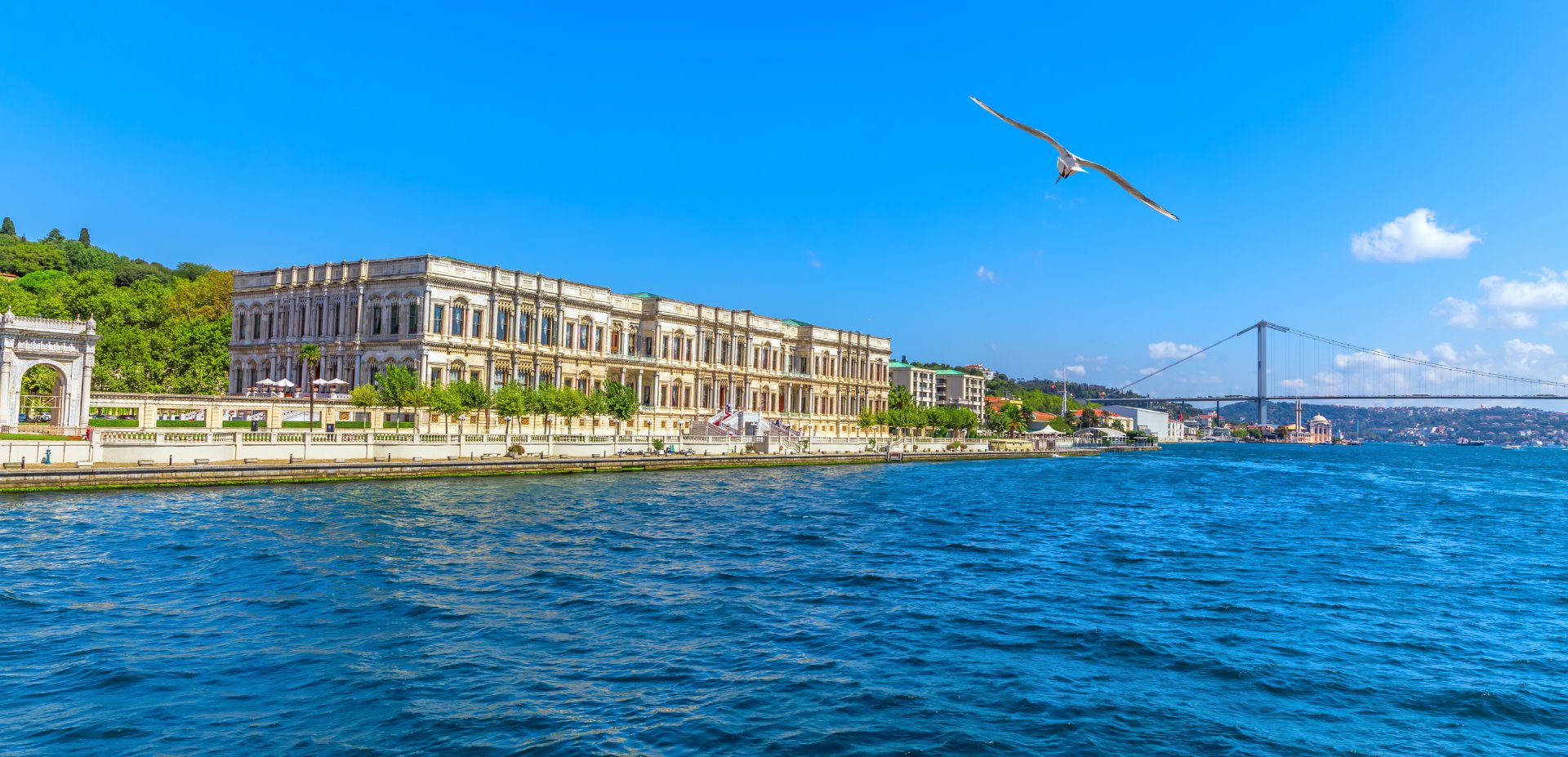
Origins of the Site
The area where Dolmabahçe Palace stands today has been known as a natural harbor where ships took refuge since ancient times. It is also rumored that during the conquest of Istanbul in the 15th century, Sultan Mehmed the Conqueror (Fatih Sultan Mehmed) landed his ships here to transport them over land to the Golden Horn.
During the Ottoman period, this bay, where the Grand Admiral (Kaptan-ı Derya) anchored the naval fleet and traditional maritime ceremonies were held, was filled in starting from the 17th century. It was transformed into a "hasbahçe" (imperial garden) for the sultans and named "Dolmabahçe" (Filled Garden). Until the 19th century, the collection of wooden pavilions and summer palaces built within this garden was known as the "Beşiktaş Waterfront Palace."
Construction of the Palace
During the reign of Sultan Abdülmecid (1839-1861), the Beşiktaş Waterfront Palace, which had become dysfunctional, was demolished, and Dolmabahçe Palace was built in its place.
The construction process was managed by imperial architects Karabet Balyan, Ohannes Serveryan, Nikoğos Balyan, and James William Smith. The construction supervision was carried out by Hacı Said Ağa between 1843-1850, and by Esseyyid Ali Şahin Bey from 1850 until the completion in 1856.
Imperial Residents
From 1856 onwards, the palace was home to six sultans and the last Caliph:
- Sultan Abdülmecid (1839-1861)
- Sultan Abdülaziz (1861-1876)
- Sultan Murad V (1876)
- Sultan Abdülhamid II (1876-1909)
- Sultan Mehmed V Reşad (1909-1918)
- Sultan Mehmed VI Vahideddin (1918-1922)
- Caliph Abdülmecid (1922-1924)
The Republic Era & Atatürk
After the proclamation of the Republic, Mustafa Kemal Atatürk stayed in the palace intermittently for 4 years between 1927 and 1938. He conducted his studies here and passed away in the palace on November 10, 1938.
During the presidency of İsmet İnönü, the palace was used as a presidential office until 1949. In 1984, it was opened to the public as a "museum-palace," preserved with its original furnishings just as it was used during the Ottoman period.
Architecture & Structure
Dolmabahçe Palace consists of the main building running parallel to the sea, along with various functional sections such as the Glass Pavilion, Foundry, Aviary, and Stables. The complex also includes the Crown Prince's Apartment (Veliahd Dairesi), the Clock Tower added during the reign of Sultan Abdülhamid II, and the Hareket Pavilions in the rear garden.
The main building, consisting of two regular floors, a basement, and an attic, is functionally divided into three sections:
- Mabeyn-i Hümâyûn (Selamlık): Where state administrative affairs were conducted.
- Harem-i Hümâyûn (Harem): The private living quarters of the Sultan and his family.
- Muayede Salonu (Ceremonial Hall): Located between the two sections, used for state ceremonies and holiday greetings.
With 285 rooms, 44 halls, 68 toilets, and 6 hammams, the palace is built as a monoblock structure on an area of 14,595 m², making it the largest palace in Turkey. While adhering to traditional Ottoman palace layout and the "Turkish House" plan with a central hall and corner rooms, the architecture incorporates Western styles such as Baroque, Rococo, and Neo-classicism, creating a unique interpretation.
Decoration & Art
The palace's interior decoration features Hereke carpets, Baccarat crystals, Sèvres and Yıldız porcelains, gifts from various state leaders, and paintings by Western artists. The synthesis of Ottoman traditional arts with Western understanding is evident throughout the palace's magnificent halls.
Did You Know?
World's Largest Chandelier
The Ceremonial Hall hosts the world's largest Bohemian crystal chandelier, weighing 4.5 tons with 750 lamps, a gift from Queen Victoria.
285 Rooms
The palace contains 285 rooms, 46 halls, 6 Turkish baths, and 68 toilets, spread across 45,000 square meters of floor space.
14 Tons of Gold
The interior decoration used 14 tons of gold leaf for gilding the ceilings and ornaments throughout the palace.
Frozen in Time
All clocks in the palace are stopped at 9:05, the moment Atatürk passed away on November 10, 1938, as a tribute to the founder of modern Turkey.
600m Bosphorus Frontage
The palace stretches along 600 meters of the European shore of the Bosphorus, making it one of the largest waterfront palaces in the world.
Largest Carpet Collection
The palace houses the largest collection of Hereke carpets in the world, handwoven in the imperial Hereke factory founded in 1843.