The Architectural Wonders of Dolmabahçe Palace: A Closer Look
Standing on the European shore of the Bosphorus, Dolmabahçe Palace is not merely a residence; it is a monumental proclamation of power, a bridge between cultures, and an architectural marvel that defies simple categorization. As we move through January 2026, the palace remains one of the most visited sites in Istanbul, captivating travelers not just with its history, but with its sheer physical beauty. Unlike the sprawling, pavilion-style layout of the earlier Topkapı Palace, Dolmabahçe was designed as a singular, monolithic structure that looks westward for inspiration while keeping its soul firmly rooted in Ottoman tradition. To walk through its gates is to enter a world where stone, glass, and gold weave a story of an empire striving for modernity without forgetting its majestic past.
The visual impact of the palace is immediate. From the moment you approach its ornate gates, you are greeted by a facade that stretches 600 meters along the strait, reflecting the shimmering waters of the Bosphorus. However, the true magic lies within the details. It is in the curve of a staircase, the cut of a crystal, and the intricate inlay of a parquet floor. For architecture enthusiasts and casual admirers alike, a closer examination of these elements reveals the genius behind the design and the incredible craftsmanship that brought this vision to life.
A Synthesis of Styles: Where East Meets West
Dolmabahçe Palace is the ultimate example of the Ottoman interpretation of European architectural trends. Built between 1843 and 1856 by the illustrious Balyan family architects (Garabet and Nigoğayos), the palace represents a stylistic departure from traditional Ottoman architecture. It is an eclectic blend, harmonizing elements of Baroque, Rococo, and Neoclassical styles with traditional Ottoman planning. This wasn't an accidental mix; it was a deliberate choice to show the world that the Ottoman Empire was compatible with contemporary European standards of art and luxury.
While the exterior facade boasts heavy European ornamentation—think Corinthian columns and triangular pediments—the interior layout preserves the traditional Turkish house plan. The separation between the administrative offices (Selamlık) and the private family quarters (Harem) is strictly maintained, yet executed with a fluidity that makes the transition seamless. To understand why this shift in architectural philosophy occurred, one must look at the broader context of the era, which you can explore further on our history page. The architects managed to create a building that feels grand and imposing from the outside, yet functional and culturally appropriate on the inside.
The Grandeur of the Crystal Staircase
Perhaps no single feature in Dolmabahçe Palace captures the imagination quite like the Crystal Staircase. Located in the Selamlık section, this double-horseshoe staircase is a masterpiece of theatrical design. It was built not just to connect floors, but to impress dignitaries and heads of state ascending to meet the Sultan. The staircase is supported by a hidden vault system, giving it an airy, floating appearance despite the heavy materials used in its construction.
The balustrades are the star of the show here. Unlike traditional wood or stone railings, these are crafted from Baccarat crystal, supported by polished mahogany and brass. When the light hits these crystals—whether from the sun streaming through the glass roof above or from the chandeliers—the entire staircase seems to dissolve into a waterfall of light. It is a sensory experience that defines the opulence of the 19th century. Walking up these stairs, one can almost hear the rustle of silk robes and the hushed conversations of viziers discussing the fate of the empire.
The Ceremonial Hall (Muayede Hall): A Feat of Engineering
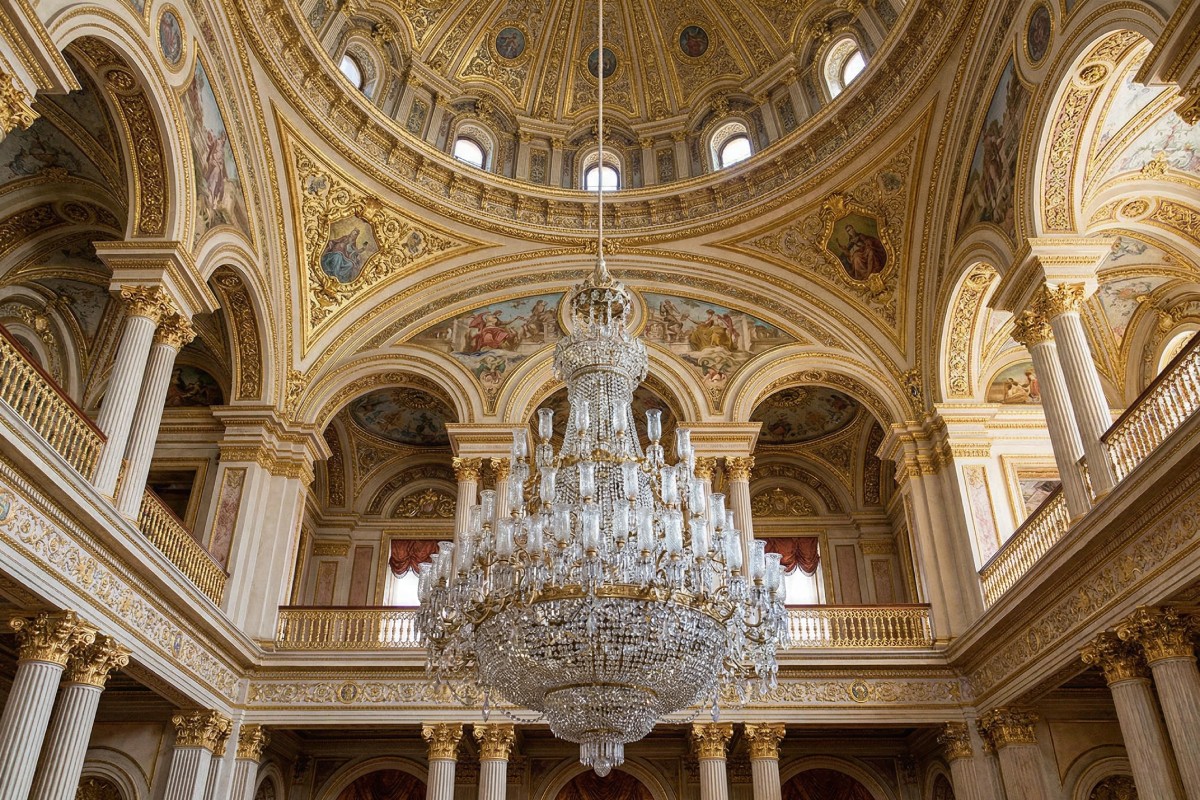
At the heart of the palace lies the Ceremonial Hall, or Muayede Hall. This is the architectural crescendo of the entire complex. Situated between the Selamlık and the Harem, this hall is vast, boasting a ceiling height of 36 meters and a floor area of 2,000 square meters. It was designed to host the most significant state ceremonies, religious holiday celebrations, and diplomatic receptions. The sheer scale of the room is designed to make the individual feel small in the presence of the state.
The hall is dominated by a massive dome, which presented a significant engineering challenge at the time. To support such a structure without cluttering the floor with too many pillars, the architects utilized 56 columns arranged to distribute the weight effectively. However, the crown jewel of this hall is the immense crystal chandelier.
- Weight: Approximately 4.5 tons.
- Lights: It holds 750 lamps.
- Origin: Often mistaken as a gift from Queen Victoria, records indicate it was purchased by the Ottomans from England.
- Impact: It is one of the largest Bohemian crystal chandeliers in the world.
The hall also features a sophisticated heating system located in the basement, which blew warm air up through the bases of the columns—a remarkably advanced technology for the mid-19th century. To see this hall is to witness the peak of Ottoman grandeur. For a detailed breakdown of how this hall fits into the palace layout, you can browse our guide to the palace sections.
Exquisite Materials: From Marble to Gold Leaf
The architects of Dolmabahçe spared no expense when it came to materials. The palace is a showcase of the finest resources available in the world at the time. The walls and floors are not merely structural; they are canvases. The exterior walls are clad in stone, but the interior is a riot of precious materials. Marmara marble, famous for its blue veins, was used extensively, alongside Egyptian alabaster (porphyry) which adds a warm, translucent glow to specific rooms.
Decoration played a pivotal role in the architectural narrative. It is estimated that approximately 14 tons of gold were used in the form of gold leaf to guild the ceilings and cornices. This wasn't just for show; gold reflects light, helping to illuminate the vast rooms in an era before electricity was commonplace. Below is a closer look at the key decorative elements that define the palace's interior:
| Element | Material & Origin | Architectural Impact |
| Parquet Floors | Rosewood, Ebony, Mahogany | Intricate marquetry designs that create optical illusions and define the flow of rooms. |
| Carpets | Hereke Silk and Wool | Custom-woven for specific rooms to match the ceiling dimensions and furniture layout. |
| Chandeliers | Baccarat and Bohemian Crystal | Provides vertical grandeur and amplifies natural light from the windows. |
| Fireplaces | Various European Marbles | Serves as the focal point of smaller salons, often paired with large crystal mirrors. |
The Harem: Private Opulence and Subtle Design
While the Selamlık was designed to project power, the Harem was designed for living. The architectural tone shifts here; it is less bombastic but equally luxurious. The corridors are narrower, and the rooms are designed for intimacy. However, the architectural quality remains high. The Blue Hall and the Pink Hall are prime examples of this shift. The ceilings here are lower compared to the Muayede Hall, creating a sense of enclosure and privacy.
The Harem architecture also focuses heavily on the view. The windows are positioned to allow the inhabitants to watch the Bosphorus without being easily seen from the outside, utilizing a clever interplay of lattice screens and heavy drapery. Accessing this private world requires a separate entry in many cases, so we highly recommend you secure a Dolmabahce Palace & Harem Fast-Track Ticket to ensure you don't miss this crucial half of the architectural story.
The Gates of Splendor
An architectural review of Dolmabahçe cannot ignore its gates. The Gate of the Treasury (Hazine-i Hassa Kapısı) and the Gate of the Sultan (Saltanat Kapısı) are monumental structures in their own right. They serve as the prelude to the palace. Heavily ornamented with floral motifs, medallions, and tughras (the Sultan's calligraphic signature), these gates frame the view of the palace against the backdrop of the city. They are designed to be photogenic and imposing, signaling to anyone arriving by land that they are entering a place of supreme authority.
Planning Your Architectural Tour
To truly appreciate the architectural wonders of Dolmabahçe Palace, one must visit with a keen eye. It is easy to be overwhelmed by the sheer amount of gold and crystal, but try to look closer. Notice how the parquet floor patterns change from room to room. Observe how the natural light changes the color of the crystal balustrades throughout the day. The palace is a living textbook of 19th-century design trends.
As you plan your visit in 2026, remember that the palace is vast, and taking in all these details takes time. Crowds can be dense, particularly in the Crystal Staircase area. For the best experience, check our visiting information to find the quietest times to explore. Whether you are an architect, a historian, or simply a traveler in search of beauty, the stones and glass of Dolmabahçe have a magnificent story to tell—one that continues to resonate more than a century after they were laid.


