Ihlamur Pavilion: A Peaceful Imperial Retreat in the Heart of Beşiktaş
Istanbul is a city of beautiful contradictions, where the vibrant energy of modern life often sits right next to the silent, majestic echoes of the past. If you have ever walked through the bustling streets of Beşiktaş, navigating the crowds near the ferry port or the lively market district, you know that the energy is infectious but can sometimes be overwhelming. Just a short walk inland from the Bosphorus shores, however, lies a hidden sanctuary that feels worlds away from the city's cacophony. The Ihlamur Pavilion (Ihlamur Kasrı) offers a rare opportunity to escape the city crowds and step into a painting of 19th-century imperial elegance.
Unlike the colossal scale of the main imperial residences, this charming summer retreat offers a more intimate glimpse into the private lives of the Ottoman Sultans. Surrounded by high walls and lush vegetation, it serves as a perfect breathing space for travelers looking to unwind. Whether you are an architecture enthusiast admiring intricate Baroque details or simply a weary explorer seeking a quiet spot for a cup of tea, Ihlamur Pavilion welcomes you with the grace of a bygone era. It is not just a museum; it is a living garden where history whispers through the leaves of the ancient linden trees.
A Sanctuary Among the Linden Trees
The name 'Ihlamur' translates to 'Linden,' a nod to the fragrant trees that have covered this valley for centuries. Long before the current structures were built, this area was a popular excursion spot for the people of Istanbul and a favored picnic ground for the royal family. It was Sultan Abdülmecid, the same ruler who commissioned the grand Dolmabahçe Palace, who decided to formalize this natural beauty into an imperial estate between 1849 and 1855. His vision was to create a space that blended the relaxing atmosphere of a countryside lodge with the sophistication of European architecture.
As you delve deeper into the history of this site, you realize that Ihlamur was more than just a pretty building; it was a stage for diplomatic receptions and a quiet refuge for the Sultan to rest after hunting. The valley was known as the 'Hacı Hüseyin Vineyards' before becoming imperial property, and its transformation marks a significant period where the Ottoman court began moving away from the secluded Topkapı Palace toward the Bosphorus. Today, the pavilion stands as a brilliant example of the Westernizing trends of the 19th-century Ottoman Empire, capturing a moment in time where East met West in architectural harmony.
Architectural Splendor: The Two Kiosks
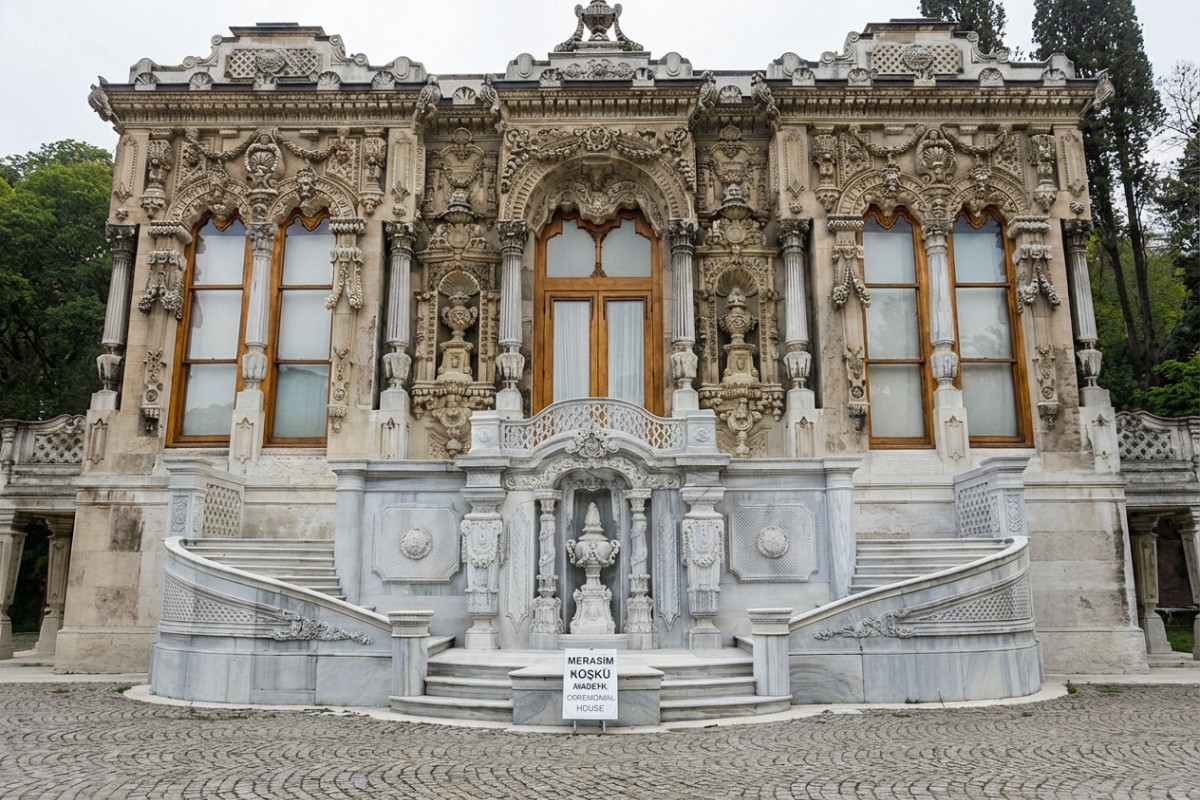
When you enter the grounds, you are not greeted by a single palace, but rather two distinct buildings that serve different purposes. The complex is divided into the Merasim Pavilion (Ceremonial Kiosk) and the Maiyet Pavilion (Retinue Kiosk). Both structures display the intricate features of the Neo-Baroque style, characterized by ornate carvings, elaborate staircases, and a sense of theatrical movement in their facades. The attention to detail is staggering, with stone carvings that look as delicate as lace, reflecting the skilled craftsmanship of the era.
The Merasim Pavilion is undoubtedly the star of the show. It was reserved for the Sultan and his high-ranking guests. Its facade is adorned with relief carvings, garlands, and vases, making it look almost like a confectionary masterpiece against the blue Istanbul sky. The interior is equally breathtaking, featuring European furniture, crystal chandeliers, and gilded decorations that rival the larger palaces. The walls are often adorned with intricate stucco work and paintings depicting idyllic landscapes. On the other hand, the Maiyet Pavilion is more modest, designed for the Sultan's entourage and harem. While its exterior is less flamboyant, it still showcases fine craftsmanship, with elegantly carved wooden ceilings and marble fireplaces. Understanding these sections helps visitors appreciate the hierarchy and daily logistics of the Ottoman court during their summer stays.
Comparing the Pavilions
To help you distinguish between the two main structures on the estate, here is a quick breakdown of their features and functions:
| Feature | Merasim Pavilion (Ceremonial) | Maiyet Pavilion (Retinue) |
| Primary Function | Hosting official ceremonies, diplomatic meetings, and the Sultan's personal use. | Housing the Sultan's family, harem, and attending court officials. |
| Architectural Style | Highly ornate Neo-Baroque with elaborate stone reliefs and a grand staircase. | Simpler, more traditional layout with less exterior ornamentation. |
| Interior Atmosphere | Grand, formal, and European-influenced decor. | Cozy, functional, and designed for private living. |
| Current Use | Functioning primarily as a museum space to admire the architecture. | Often used as a winter cafeteria or exhibition space. |
A Royal Tea Break in the Gardens
One of the most delightful aspects of visiting Ihlamur Pavilion is that it is not a 'look but don't touch' experience. While the interiors of the Merasim Pavilion are preserved as a museum, the gardens and the Maiyet Pavilion area offer a living experience. This is one of the few historical sites in Istanbul where you can sit down and enjoy the atmosphere actively. The gardens are beautifully preserved, featuring a pool, roaming peacocks, and ducks that add a touch of whimsy to the imperial setting. The meticulously manicured flowerbeds burst with seasonal colors, and the ancient trees provide ample shade. It is the perfect place to pause your sightseeing marathon.
Imagine sitting under the shade of a century-old magnolia or linden tree, sipping a traditional Turkish tea or a frothy Turkish coffee. The on-site cafeteria allows you to enjoy a relaxing tea break in these beautifully preserved gardens, offering a quieter glimpse into royal life than you would find at the major tourist hubs. It is a favorite spot for locals to read a book or catch up with friends, and joining them makes you feel less like a tourist and more like an Istanbulite. The air here feels fresher, and the silence is only broken by the sound of birds and the gentle rustle of leaves.
Connecting the Dots: From Dolmabahçe to Ihlamur
Located just a short distance inland from the Bosphorus, Ihlamur Pavilion is historically and geographically tied to the grand Dolmabahçe Palace. It makes sense to view them as part of the same narrative. Sultan Abdülmecid built Dolmabahçe as the administrative center and main residence, while Ihlamur was his escape—a place to breathe. If you are planning to explore the full grandeur of the Ottoman 19th century, we highly recommend you combine your visit.
A great itinerary involves starting your day at the waterfront. You can secure a Dolmabahce Palace & Harem Fast-Track Ticket to witness the immense scale of the empire's power in the morning. After soaking in the gold and crystal of the main palace, walk inland through the Beşiktaş district to reach Ihlamur Pavilion in the afternoon. The contrast is striking: Dolmabahçe leaves you in awe of the power, while Ihlamur charms you with its peace. It rounds out the story of the Sultans, showing not just how they ruled, but how they relaxed.
Practical Information for the Modern Traveler
Reaching Ihlamur Pavilion is relatively easy and offers a chance to see a more residential side of Istanbul. If you are coming from the Beşiktaş ferry pier, it is about a 15 to 20-minute uphill walk. The walk takes you through the lively streets of the Beşiktaş Çarşı (market), which is an experience in itself. Alternatively, a short taxi ride from the coast will get you there in minutes. The pavilion is open most days, but like many national palaces, it has specific closed days (usually Mondays), so it is wise to check ahead.
Visiting Hours: Ihlamur Pavilion is generally open from 9:00 AM to 5:00 PM, with the last entry at 4:30 PM. However, these hours can vary seasonally, so it's always best to check the official website or call ahead to confirm.
Entry Fees: As of [Güncel Tarih], the entry fee for Ihlamur Pavilion is approximately [Güncel Ücret] Turkish Lira. Museum Pass Istanbul is usually accepted, providing free entry. Concessions may be available for students and seniors with valid identification.
Before you go, here are a few tips to maximize your experience:
- Timing: The best time to visit is on a weekday morning or late afternoon to fully appreciate the solitude. Spring (when the Judas trees and magnolias bloom) and June (when the linden trees blossom) are particularly magical.
- Photography: The exterior is a photographer's dream. The way the sunlight hits the baroque carvings creates incredible shadows and highlights.
- Shoes: Wear comfortable walking shoes, especially if you plan to walk up from the seaside.
- Rules: Remember that inside the museum sections, photography might be restricted to preserve the artifacts.
For more detailed operational hours and specific entry requirements, be sure to review our visiting information page. Whether you are a history buff or just someone seeking a quiet corner in a chaotic city, Ihlamur Pavilion awaits with open gates and a peaceful embrace.


