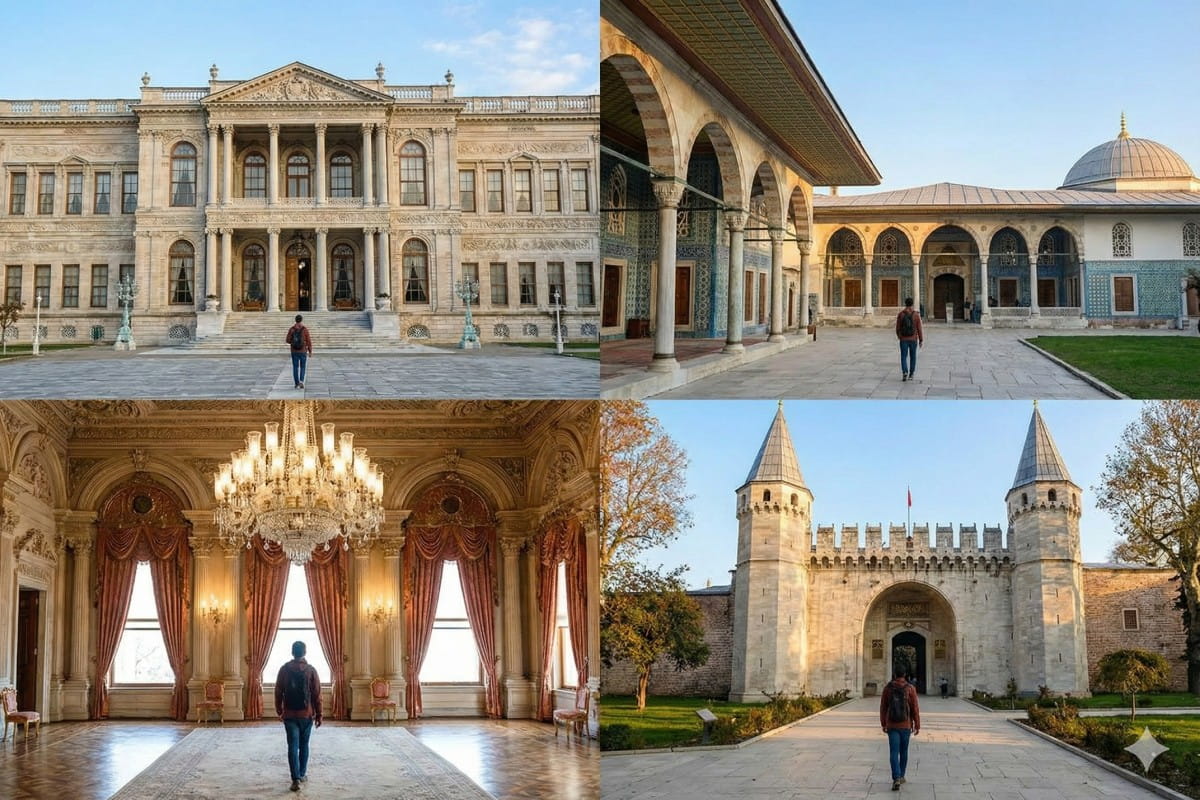
Dolmabahçe Palace vs. Topkapı Palace: Which Royal Experience Suits You?
Standing in the heart of Istanbul, travelers are often faced with a delightful yet difficult dilemma: choosing between the city's two monumental royal residences. On one hand, you have the sprawling, mysterious courts of Topkapı Palace, which served as the command center of the Ottoman Empire for four centuries. On the other, there is the glimmering, European-inspired elegance of Dolmabahçe Palace, reflecting the empire's final era of modernization and grandeur. While visiting both is the ideal scenario for any history enthusiast, tight schedules often require making a choice. Understanding the distinct character of each site is crucial for planning an itinerary that resonates with your personal interests.
The decision ultimately comes down to what kind of historical narrative you wish to explore. Are you drawn to the intrigue of medieval courts, sacred relics, and panoramic views of the Golden Horn? Or does the allure of crystal chandeliers, neoclassical architecture, and the poignant story of the late Ottoman period speak louder to you? As we navigate through 2026, both museums have refined their visitor experiences, making them world-class destinations. This comparison will break down the architectural differences, time commitments, and unique atmospheres of each palace to help you decide which royal door to unlock.
The Tale of Two Eras: Historical Context
To truly appreciate these structures, one must understand the timeline they represent. Topkapı Palace is the embodiment of the classical Ottoman zenith. Constructed shortly after the conquest of Constantinople in the 15th century, it represents the traditional, centralized power of the Sultans. Walking through its gates is like stepping back into a time when the empire was expanding across three continents. The architecture here is organic, having evolved over centuries with pavilions added by different rulers. For a deeper dive into the lineage of Sultans who lived here, you might want to explore our detailed history page, which chronicles the rise and fall of the dynasty.
In stark contrast, Dolmabahçe Palace represents a radical shift in ideology and aesthetics. Built in the mid-19th century by Sultan Abdülmecid I, it was a statement to the world that the Ottoman Empire was modern, Western-oriented, and still capable of immense luxury. The royal family moved from the medieval confines of Topkapı to this waterfront palace to emulate the European courts of Versailles and Schönbrunn. It is a single, massive structure rather than a collection of pavilions, symbolizing a centralized and modernized administration. This palace also holds a special place in modern Turkish history, as it was the residence where Mustafa Kemal Atatürk, the founder of the Republic, spent his final days.
Architectural Showdown: Oriental Charm vs. European Opulence
The visual experience of these two landmarks could not be more different. Topkapı Palace is designed around four main courtyards, offering a sense of openness and connection with nature. It is a masterpiece of Middle Eastern design, featuring intricate Iznik tiles, gilded ceilings, and serene gardens. The layout encourages wandering; you move from the public administrative areas to the increasingly private quarters of the Sultan. The architecture is human-scale, intimate, and deeply connected to the landscape, offering some of the best views of the Bosphorus and the Sea of Marmara from its terraces.
Dolmabahçe, however, is designed to overwhelm and impress with sheer scale and glitter. It is a stylistic blend of Baroque, Rococo, and Neoclassical elements, fused with traditional Ottoman planning. As you walk through the various sections of the palace, you will notice the obsession with symmetry and decoration. The palace boasts the world's largest Bohemian crystal chandelier, a gift from Queen Victoria, hanging in the Ceremonial Hall. The famous Crystal Staircase, with its Baccarat crystal balusters, is a photographer's dream (though photography is restricted in many interior areas). If you love gold leaf, heavy velvet, and intricate parquetry floors, Dolmabahçe is an architectural feast.
The Visitor Experience and Atmosphere
When you visit Topkapı, prepare for a walking expedition. The site is vast, and the experience is somewhat decentralized. You will visit the Imperial Council chamber, the Treasury filled with emerald-encrusted daggers and the Spoonmaker's Diamond, and the Chamber of Holy Relics, which houses sacred items belonging to Prophet Muhammad. The atmosphere is solemn, historical, and deeply atmospheric. It feels like a fortress city within a city. The Harem section in Topkapı is a maze of narrow corridors and stunning tiled rooms, evoking stories of intrigue and survival.
Dolmabahçe offers a more structured, linear visitor experience. Because it is a single building (monoblock) with delicate furnishings, visitors typically follow a designated route. The preservation of the interiors is immaculate; the furniture, drapes, and carpets are original. The vibe here is one of frozen time. You aren't just looking at walls; you are walking through fully furnished rooms that look as if the Sultan just stepped out. For travelers who prefer a more guided flow rather than wandering through open courtyards, Dolmabahçe provides a coherent narrative from the entrance to the exit.
Comparison of Practical Logistics
| Feature | Topkapı Palace | Dolmabahçe Palace |
| Architecture Style | Classic Ottoman, Pavilions, Courtyards | Neoclassical, Baroque, Rococo |
| Primary Atmosphere | Historical, Religious, Open-air | Luxurious, Formal, European |
| Time Required | 3 to 4 hours (extensive walking) | 1.5 to 2.5 hours (structured route) |
| Key Highlights | Holy Relics, Spoonmaker's Diamond, Harem tiles | Ceremonial Hall, Crystal Staircase, Atatürk's Room |
| Location Context | Historical Peninsula (near Hagia Sophia) | Beşiktaş (Bosphorus waterfront) |
Navigating the Crowds and Time Management
Time is often the deciding factor for many travelers. Topkapı Palace is located on the Historical Peninsula, right next to Hagia Sophia and the Blue Mosque. If your hotel is in Sultanahmet, it is incredibly convenient. However, because the complex is so large and includes separate ticketed sections like the Harem and Hagia Irene, you need to dedicate at least half a day to do it justice. Rushing through Topkapı often leads to missing the subtle beauty of its gardens and the significance of its collections. For detailed tips on how to plan your day, check our visiting information page.
Dolmabahçe Palace is located in the Beşiktaş district, slightly removed from the old city center but easily accessible by tram or ferry. The visit is generally shorter because the route is strictly defined. This makes it an excellent option if you have a free morning or afternoon and want a concentrated dose of history without the physical exhaustion of walking kilometers across courtyards. However, queues can be long, especially during peak seasons. To maximize your time, we highly recommend securing a Dolmabahce Palace & Harem Fast-Track Ticket beforehand, which allows you to bypass the ticket lines and enter with a guide who can provide context before you explore.
Which Palace Should You Choose?
If you are still on the fence, consider these traveler profiles to see where you fit in:
- Choose Topkapı Palace if: You are a history buff interested in the classical Ottoman era, Islamic art, and court life. You enjoy exploring outdoor gardens and want to see the famous Holy Relics. You are already in the Sultanahmet area and have 3-4 hours to spare.
- Choose Dolmabahçe Palace if: You love European art, opulence, and interior design. You are interested in the late Ottoman period and the early Republic years (Atatürk). You prefer a structured tour experience that requires less walking under the sun. You want to see the stunning Bosphorus views from sea-level gates.
- Choose Both if: You have at least three days in Istanbul. They are like bookends to the Ottoman story—one shows the rise and stability, the other the transformation and end. Seeing both provides a complete picture of the empire's evolution.
Ultimately, there is no wrong choice. Both palaces are UNESCO-worthy sites that offer a glimpse into the lives of one of history's most powerful dynasties. Whether you choose the tiled serenity of Topkapı or the crystal-laden grandeur of Dolmabahçe, you are guaranteed an unforgettable journey through time. Plan ahead, wear comfortable shoes, and let the walls whisper their stories to you.


