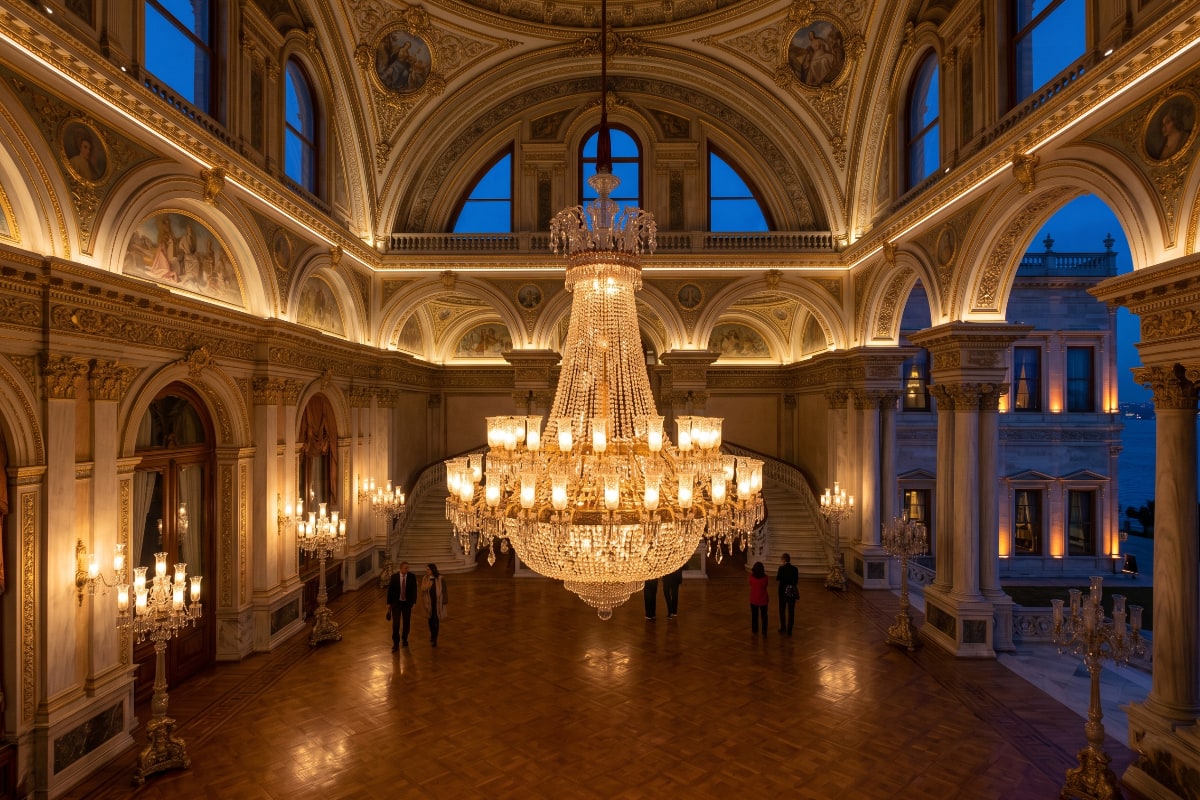
The Illuminated Palace: Lighting Innovations at Dolmabahçe
When one imagines the silhouette of Istanbul against the night sky, the historic peninsula often dominates the mind. However, moving forward to the 19th century, a different kind of spectacle emerged along the European shores of the Bosphorus. Dolmabahçe Palace was not merely a new residence for the Ottoman Sultans; it was a bold statement of modernity, Western integration, and technological prowess. Unlike the shadowy, mystical corridors of the older Topkapı Palace, Dolmabahçe was designed to be a palace of light. Its architecture, featuring vast windows and soaring ceilings, was essentially a canvas for the most advanced lighting technologies of the era. To walk through its halls today is to step into a history where engineering met art in a dazzling display of crystal and fire.
The transformation of the Ottoman court's lifestyle is deeply embedded in the walls of this structure. While the architecture reflects a shift towards Baroque and Neoclassical styles, the true revolution lay in how the palace was illuminated. In an age before the widespread grid of electricity, the Sultans sought to banish the darkness with the latest industrial innovations imported from the West. This drive for illumination turned the palace into a glittering jewel that reflected upon the waters of the strait, signaling the empire's enduring grandeur to every passing ship.
A Symphony of Crystal and Glass
The first thing that captures the visitor's eye is the sheer abundance of crystal. It is impossible to discuss the lighting of Dolmabahçe without bowing before its collection of chandeliers, which is regarded as one of the finest in the world. The palace houses a staggering collection of crystal chandeliers, candelabras, and crystal staircases that were designed to amplify light sources, whether they were candles, oil lamps, or later, gas and electricity. When you explore the various Sections of the palace, you are essentially walking through a museum of 19th-century glass artistry.
Before delving into the specifics of Dolmabahçe's lighting, it's worth noting the evolution of artificial light leading up to its construction. For centuries, civilizations relied on rudimentary methods like open fires, oil lamps using animal or vegetable fats, and beeswax candles. These sources provided limited illumination, were often smoky and hazardous, and required constant tending. The development of the Argand lamp in the late 18th century, with its improved airflow and brighter flame, marked a significant step forward. However, it was the advent of gas lighting in the early 19th century that truly revolutionized illumination, paving the way for innovations like those seen in Dolmabahçe Palace.
The World’s Largest Bohemian Chandelier
The crown jewel of this illuminated collection hangs in the Ceremonial Hall (Muayede Salonu). For years, a popular urban legend suggested this was a gift from Queen Victoria of the United Kingdom. However, archival documents have clarified that it was actually purchased by the Ottoman court, a testament to the Sultan's purchasing power and taste. This colossal fixture is the world's largest Bohemian crystal chandelier.
Weighing approximately 4.5 tons and boasting 750 lamps, this masterpiece is a feat of engineering as much as it is of art. In the days before electricity, lighting this chandelier was a logistical operation involving a team of nimble servants and intricate pulley systems. Today, when it is fully illuminated, the refraction of light through thousands of hand-cut crystals creates an atmosphere that is nothing short of ethereal. It serves as the focal point of the vast hall, drawing the eye upward to the dome and emphasizing the immense verticality of the space.
Baccarat and Murano Masterpieces
While the Bohemian giant steals the show, the palace is also home to exquisite examples of French Baccarat and Venetian Murano glass. The distinct clarity of Baccarat crystal was favored for its diamond-like sparkle, which was essential for maximizing the light output of gas lamps. You will notice standing candelabras lining the corridors and smaller, yet equally intricate, chandeliers in the private quarters of the Harem. If you are interested in how these private spaces were utilized and lit, a guided tour with a Dolmabahce Palace & Harem Fast-Track Ticket allows you to see the contrast between the grand ceremonial lighting and the softer, more intimate illumination of the family quarters.
From Candles to Gaslight: A Technological Leap
The construction of Dolmabahçe Palace coincided with the industrial revolution's arrival in the Ottoman Empire. Sultan Abdülmecid I did not want a palace that looked to the past; he wanted a residence that utilized the cutting-edge technology of the 1850s. Consequently, Dolmabahçe became one of the first structures in the empire to implement a comprehensive gas lighting system.
To understand the magnitude of this shift, one must appreciate the infrastructure required. The administration went as far as establishing a dedicated gasworks (Gazhane) nearby to supply the fuel needed for the thousands of lamps within the palace complex. This was not merely about aesthetics; it was about extending the day. Gas lighting provided a steady, bright flame that allowed for elaborate evening receptions, diplomatic meetings, and entertainment that could last well into the night, free from the smoke and dimness of traditional wax candles or oil lamps.
| Era of Lighting | Primary Technology | Fuel Source | Atmosphere Created |
| Early 19th Century | Oil Lamps & Beeswax Candles | Animal fats, Olive oil, Wax | Dim, warm, flickering, smoky |
| Mid 19th Century (Palace Opening) | Gas Lighting Systems | Coal Gas (Produced at Gazhane) | Bright, steady, yellowish-white, modern |
| Early 20th Century | Electrification | Electricity (Grid & Generators) | Brilliant, clear, safe, consistent |
The transition to gas required intricate piping systems hidden behind the ornate plasterwork and gilded decorations. The lamps themselves were often disguised as traditional candelabras, blending the old aesthetic with the new technology. This seamless integration of industrial function and artistic form is a key aspect of the palace's History, marking a pivotal moment in Ottoman architectural evolution.
The Crystal Staircase: An Architectural Light Well
Perhaps the most photogenic example of the palace's obsession with light is the Crystal Staircase. This double-horseshoe staircase is famous not just for its shape, but for the material used in its balustrades: pure Baccarat crystal. However, the brilliance of this staircase is not solely due to the crystal rails; it is the result of a masterful architectural decision regarding natural light.
Above the staircase sits a massive glass roof, a skylight that floods the area with daylight. The concept was simple yet brilliant: allow the sun to do the work during the day. The sunlight pours in, hits the crystal balusters, and scatters into a spectrum of rainbows across the mahogany floors and red carpets. At night, the gas chandeliers would take over, their flames reflecting endlessly in the crystal pillars, creating a tunnel of light that guided dignitaries to the Sultan's reception rooms.
The Arrival of Electricity and Modern Preservation
As the 20th century approached, Dolmabahçe Palace once again adapted to the times. The transition from gas to electricity was gradual. Initially, the palace utilized its own generators before connecting to the city's burgeoning grid. The chandeliers were retrofitted to hold electric bulbs, a modification that preserved their beauty while eliminating the fire hazards and soot associated with gas lighting.
Today, the lighting of Dolmabahçe is carefully managed to preserve the artifacts. Modern LED technology is often used to replicate the warm glow of the original incandescent bulbs while emitting no heat or UV radiation that could damage the delicate fabrics and paintings. When Visiting Information is reviewed, guests will note that flash photography is strictly prohibited inside. This is not just to manage crowds, but to protect the integrity of the light-sensitive historical treasures that fill the rooms.
Key Lighting Features to Look For
During your visit, try to spot these specific details that showcase the lighting innovations:
- The colored glass lamps: In the Harem sections, look for colored Bohemian glass which created mood lighting long before dimmer switches existed.
- The floor lamps: Notice the heavy crystal bases on floor lamps, designed to prevent them from tipping over while refracting light at a lower level.
- The reflection strategy: Observe how large mirrors are almost always placed behind or opposite chandeliers to double the perceived space and light intensity.
Dolmabahçe Palace stands as a monument to a time of transition. It captures the moment the Ottoman Empire embraced the industrial age, using light not just to see, but to dazzle. From the engineering marvel of the gas systems to the artistic triumph of the crystal chandeliers, the palace remains a glowing testament to 19th-century innovation.


